THE GODFATHER: BAPTISM SCENE
This scene from the climax of the 1972 film "The Godfather" details the baptism of the main character's godson, as well as the murder of the last 5 dons of New York. The masterful use of cross-cutting in the climax of the film help make this one of the most effectively dramatic editing sequences; further emphasised with the chilling organ score and the religious verses.
At the beginning of the sequence, the cuts are slow and work to bring the camera closer and closer to the protagonist - Michael - and his godson. We start very far away, distant from the baby, perhaps invoking the audience's desensitisation to the sins of the mafia. As the baby's bonnet is undressed by the hands of Michael and Kay, a cross cut matches them to the hands of a man preparing to murder.
This is the first starkly juxtaposing cut in the sequence; there is a sharp contrast in tone between the hands preparing a new life and the hands preparing death, and yet the cut is almost subtle in the way it seamlessly matches the pairs of hands. This editing technique is utilised throughout the sequence, effectively demonstrating the parallels between the two lives of Michael to the audience. As the gun is prepared, the camera cuts further and further away from the handler. This similarly bridges the two lives of Michael together, distancing the audience from the murders he has ordered while they occur ominously at the same time of the baptism.
It then cuts from the preparation of the gun to the cold and distant expression of Michael; This may highlight that he is has the inevitable deaths he ordered pondering on his mind. While this happens the religious organ in the back gets subtly louder, anticipating the christening as well as the murders.
There's a close up shot of the priest's hand, essentially dragging the camera towards the baby's head as he goes to touch it. The baby is calm and silently wriggling when the camera settles on it. The next cut is another parallel edit, this time of a barber squeezing out shaving cream, preparing to use it on one of the men ordered to commit the murder. The same pan over to the subject is utilised, except the calm and tranquillity of the baptism is instead filled with an unsettling foreboding. The contrapuntal Bible verses and religious organ that bridge over the visuals further accentuate the uncomfortable and hypocritical nature of the entire baptism.
A brief cut to another man preparing a uniform on a bed is interrupted by another similar shot of the priest's hand blessing the baby. It then cross cuts to the same man carefully handling a bag containing a gun and a police badge. It then cuts to a medium close up of the man, now wearing a police's hat and the uniform. The fairly quick cuts create a sense of swiftness and efficiency while the baptism goes on, and the use of costume makes the audience unsettled as they are aware this man is not a real police officer.
Next, the director utilises a high angle shot of a man climbing up a set of stairs. He is dressed in a suit and is holding some sort of package, effectively creating enigma codes as to what exactly his role is. He gets higher up the stairs - and closer to the camera - which effectively parallels the rising organ music that continues to bridge over the juxtaposing narrative.
When it cuts back to the church, the priest continues to bless the baby. The priest then asks Michael if he believes in God, by which he responds "I do." The audio of Michael responding to the priest's vows bridges over to what is effectively a montage of fairly quickly paced cuts building up to the killings. The sound bridge creates a brilliant dichotomy between good and evil, as Michael takes the responsibility of being a godfather in terms of both the mafia and religion.
We get another cross-cut back to the baby - and then a brief cut to that same wide shot of the church from the beginning of the sequence - before cutting back to the build up to the crimes. The sound bridge has continued and this time we hear the baby crying along with the chilling religious verse and booming organ, building up to an impactful climax.
After this, the priest asks Michael "Do you renounce Satan?" as the music pauses and we settle on Michael's expression for a moment. Suddenly, a cross cut to a group of men coming out of an elevator accompanies a sound from the organ as they're brutally shot. We then cut back to Michael who says he does renounce Satan, and as the audience processes the irony of his statement another man is murdered.
The pattern of cross cutting from murder to murder creates an extremely chaotic emotional pay off to the intense build up created throughout the entire sequence. It ends with fast cuts from the many dead bodies and Micheal's expression as the baby finishes getting baptised.
Wednesday, 11 December 2019

Tuesday, 10 December 2019
Film & TV Language: Editing video
THE CONCEPT:
> A sequel to my Cinematography video,
> as well as the first video exploring the branching paths and parallel timelines that are part of the year 12 media cinematic universe
> The cat wants revenge
> Not vegan friendly
THE SCRIPT:
https://docs.google.com/document/d/1gRKfGbRUeKsxGpXmkUGhgaL2FRp8jJdN_RTlodDcWZo/edit?usp=sharing
THE SHOT LIST:
medium close up of phone call
long shot of me walking
match cut close up on handle
close up of jenny turning
over the shoulder of walking to Jenny
match cut shot of chair
> A sequel to my Cinematography video,
> as well as the first video exploring the branching paths and parallel timelines that are part of the year 12 media cinematic universe
> The cat wants revenge
> Not vegan friendly
THE SCRIPT:
https://docs.google.com/document/d/1gRKfGbRUeKsxGpXmkUGhgaL2FRp8jJdN_RTlodDcWZo/edit?usp=sharing
THE SHOT LIST:
medium close up of phone call
long shot of me walking
match cut close up on handle
close up of jenny turning
over the shoulder of walking to Jenny
match cut shot of chair
close up on slam
over the shoulder dialogue shot
over the shoulder dialogue shot
reverse dialogue shot
medium shot of Jenny shooting
medium shot of Jenny shooting
body shot of pig
birds eye long shot of pig dead on floor
THE VIDEO:
THE VIDEO:
Tuesday, 19 November 2019
Film & TV Language: Cinematography feedback and learner response
Teacher's feedback:
WWW:- Jump cut
- Good music
- Post production
- Zoom on in cat effective
- Unusual theme/ narrative
- Slightly jerky zoom
- Handheld close-up: unsteady
Peer feedback:
WWW:
- Great use of camera angles/shots
- Good narrative
- Good movements
- Editing
- Song
- Clever plot
- Easy to follow
- Very unique and engaging
- Lighting
- Shake: steadier camera work
- Clearer narrative
Self Assessment:
WWW:
- I really like what I did with the sound
- The subject matter and themes
- Use of camera angles and shots
EBI:
- I could have included a voice over to make the narrative more understandable
- I need to train my hands to be steadier
I learnt about how camera angles can influence the audience to think certain ways about characters: For example, a low angle can make a character seem imposing and important and a high angle can make a character seem meek and vulnerable. I know in the future I need to improve my camera work when filming as to not create unsteady shots, which I can achieve by using a tripod.
Thursday, 14 November 2019
CINEMATOGRAPHY VIDEO TASK
For this task, I used a variety of camera angles and shots to tell the tragic story of a black cat who is sombrely reflecting on being cheated on by a pig. Despite the shaky camera work, I still think the specific framing of the shots helped convey the tone of my narrative. I especially like the two over-the-shoulder(?) shots and how the parallel each other: The first one of the cat looking into the window and seeing a reflection of the bed, and the second one of the pig looking towards the opening door in shock.
Friday, 8 November 2019
Film & TV Language: Cinematography blog tasks
JOJO: DIAMOND IS UNBREAKABLE
[Analysis of this clip up to 1:01]
The opening shot begins as a low angle establishing shot that starts as a curved pan that straightens out in a "J" formation. The angle at which the camera moves is slightly tilted, causing a disorienting effect perhaps akin to a hemispherical image produced by a fisheye lens. Using such unusual camera movements and angles in the very first scene foreshadows the town to be strange and full of anomalies. In the scene, you can see rows of houses and an array of people, easily giving life to the town. As the camera moves, the scene cuts to inside a house, panning to reveal the radio from which the voice over is produced. The tilted angle again connotes a sense of mystery and unfamiliarity, contrasting with the domestic setting of a home. The next couple of shots detail close ups of a hand; cooking bacon and cracking an egg. The next shot utilises an extremely low angle and then switches to a high angle in a kind of shot/reverse shot. These specific shots are used as the egg drops onto the pan, essentially tracking the egg as it falls. The domestic and joyous atmosphere suggested by these scenes, combined with music, creates a shocking reveal at the end of the sequence. The continued use of close ups in the sequence not only creates emphasis on the food, but also creates enigma codes on who the hand belongs to. The next shot has the camera zooming out on the TV at a dutch angle, revealing an empty living room. This specific zoom and angle subtly insinuates there's something slightly off about this house. A close up of the toaster then pans over to a glass. The hand then places the plate of bacon and egg onto the table and rests itself on the side. The radio starts to become distorted as the camera very gradually zooms out to reveal that the hand is severed. The music switched to ominous sounds, emphasising the sense of foreboding. The camera pans over one last close up of the hand and then follows the trail of blood it left behind, transitioning into an artistic ripple of blood that forms the opening title. This confusing and disturbing pay off to the domestic scenes beforehand create an instantly eerie atmosphere, as well as foreshadows the main antagonist of the series as a threat to the peace of the town.

This shot from "Lawrence of Arabia" uses a two shot to create a binary opposition between the two men in lighter colours and the mysterious shadowy figure in the distance. The use of costume to emphasise conflict helps the audience side with the men in lighter colours. The audience feels a similar sense of unfamiliarity and confusion as they look on in the distance. The way the shot is framed makes the audience feel as if they are in the scene with the characters, as the camera is positioned at eye-level. The extreme long shot creates a sense of distance and furthers the tension.
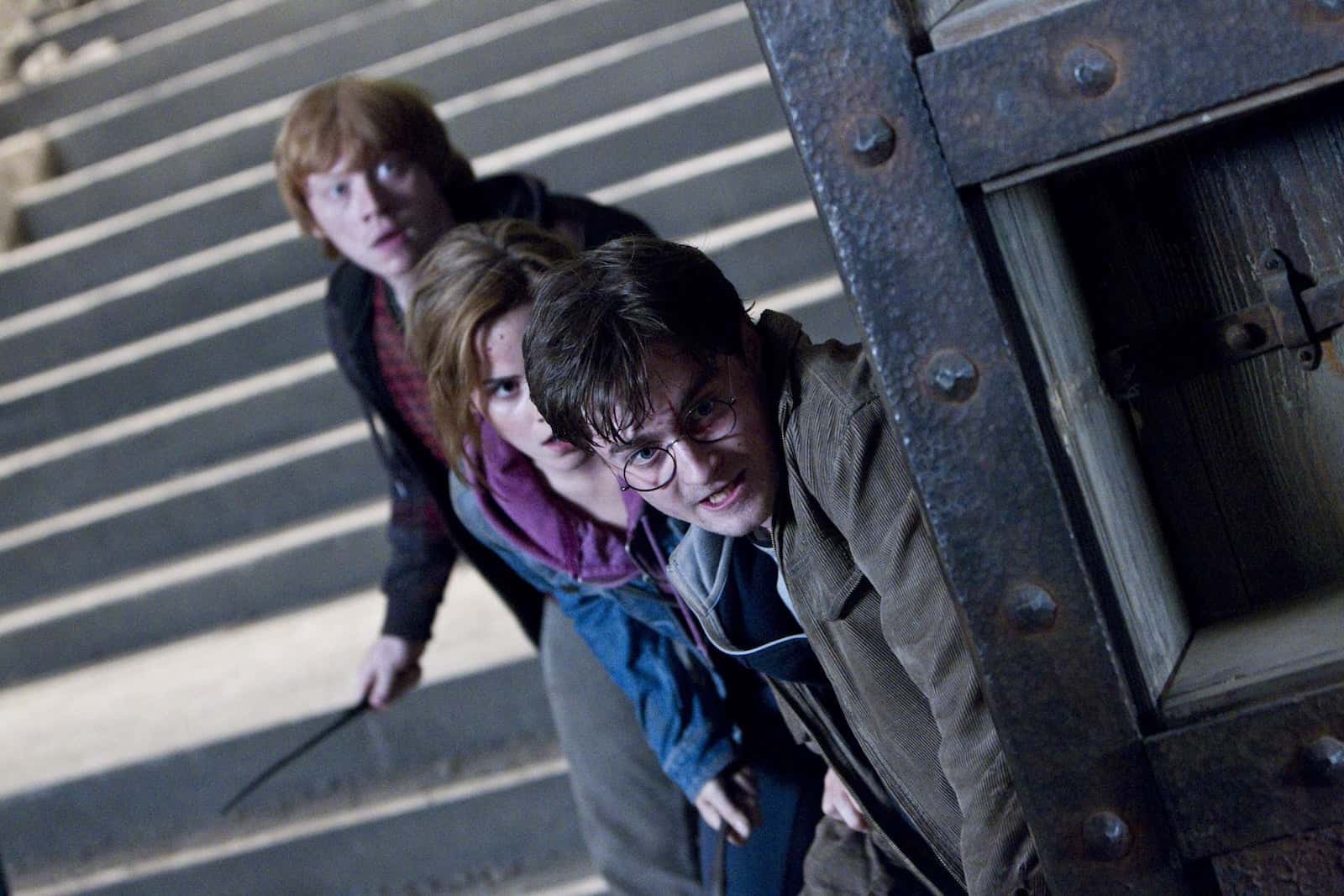
This shot from Harry Potter uses a dutch angle and medium shot in order to create a sense of enigma and tension. It's clear that there's something wrong in the anticipating atmosphere of the shot and the tense looks on the main characters faces. The shot makes the characters seem unbalanced, emphasising how this is a situation that the characters are finding difficult to grasp. The medium shot makes it so you feel an emotional connection to the characters and understand what they're going through.
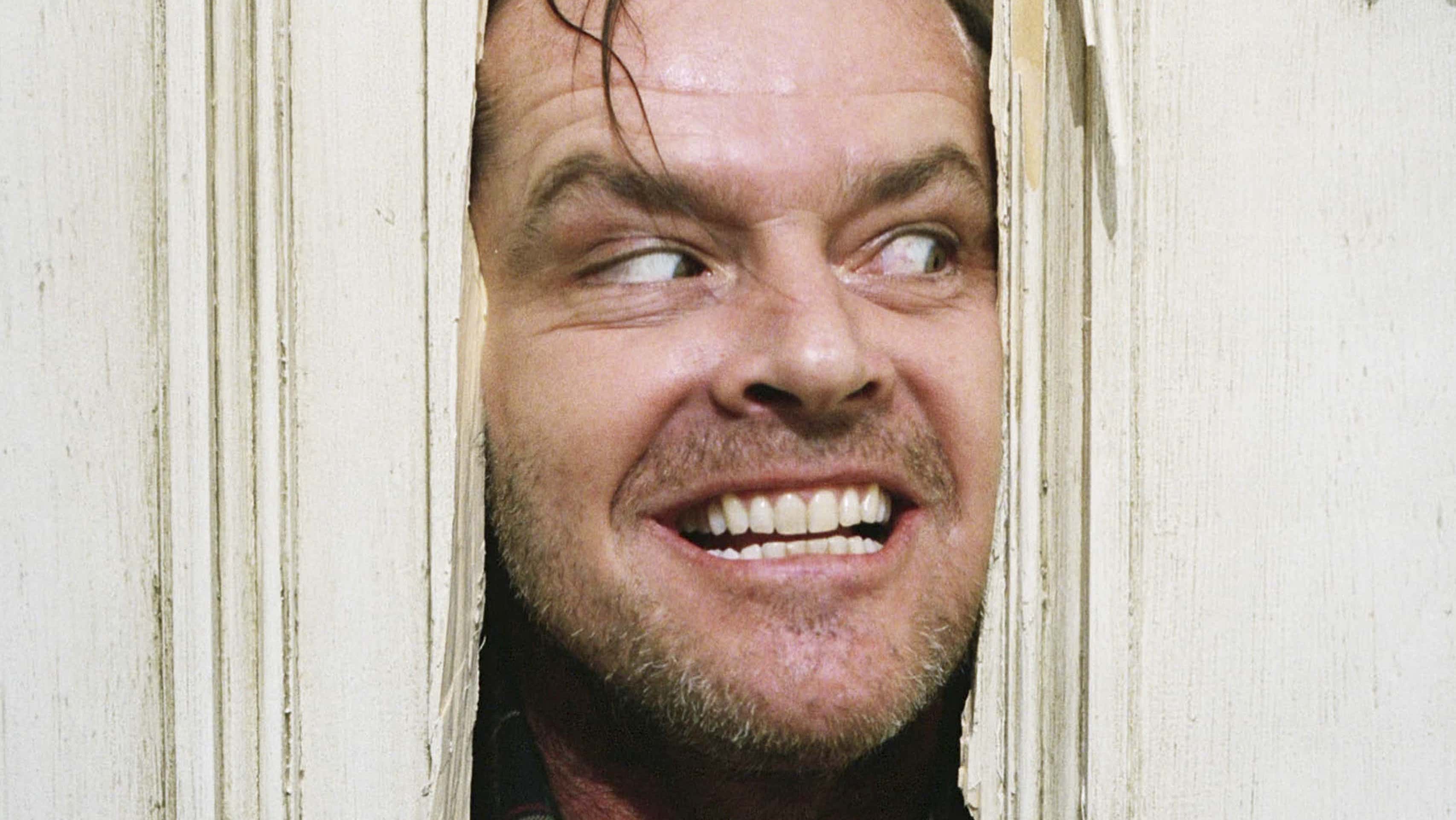
This famous shot from "the Shining" utilises a close up to create an exhilarating fear and tension in the scene. The audience witnesses every detail of Jack's crazed expression, serving as an incredibly tense and horrifying moment for both the audience and his wife. The way his face is bordered by the door connotes how he's demolishing all constraints he once had and has snapped as he attempts to brutally axe his wife and child to death.
[Analysis of this clip up to 1:01]
The opening shot begins as a low angle establishing shot that starts as a curved pan that straightens out in a "J" formation. The angle at which the camera moves is slightly tilted, causing a disorienting effect perhaps akin to a hemispherical image produced by a fisheye lens. Using such unusual camera movements and angles in the very first scene foreshadows the town to be strange and full of anomalies. In the scene, you can see rows of houses and an array of people, easily giving life to the town. As the camera moves, the scene cuts to inside a house, panning to reveal the radio from which the voice over is produced. The tilted angle again connotes a sense of mystery and unfamiliarity, contrasting with the domestic setting of a home. The next couple of shots detail close ups of a hand; cooking bacon and cracking an egg. The next shot utilises an extremely low angle and then switches to a high angle in a kind of shot/reverse shot. These specific shots are used as the egg drops onto the pan, essentially tracking the egg as it falls. The domestic and joyous atmosphere suggested by these scenes, combined with music, creates a shocking reveal at the end of the sequence. The continued use of close ups in the sequence not only creates emphasis on the food, but also creates enigma codes on who the hand belongs to. The next shot has the camera zooming out on the TV at a dutch angle, revealing an empty living room. This specific zoom and angle subtly insinuates there's something slightly off about this house. A close up of the toaster then pans over to a glass. The hand then places the plate of bacon and egg onto the table and rests itself on the side. The radio starts to become distorted as the camera very gradually zooms out to reveal that the hand is severed. The music switched to ominous sounds, emphasising the sense of foreboding. The camera pans over one last close up of the hand and then follows the trail of blood it left behind, transitioning into an artistic ripple of blood that forms the opening title. This confusing and disturbing pay off to the domestic scenes beforehand create an instantly eerie atmosphere, as well as foreshadows the main antagonist of the series as a threat to the peace of the town.
Film/TV stills
This shot from "Lawrence of Arabia" uses a two shot to create a binary opposition between the two men in lighter colours and the mysterious shadowy figure in the distance. The use of costume to emphasise conflict helps the audience side with the men in lighter colours. The audience feels a similar sense of unfamiliarity and confusion as they look on in the distance. The way the shot is framed makes the audience feel as if they are in the scene with the characters, as the camera is positioned at eye-level. The extreme long shot creates a sense of distance and furthers the tension.
This shot from Harry Potter uses a dutch angle and medium shot in order to create a sense of enigma and tension. It's clear that there's something wrong in the anticipating atmosphere of the shot and the tense looks on the main characters faces. The shot makes the characters seem unbalanced, emphasising how this is a situation that the characters are finding difficult to grasp. The medium shot makes it so you feel an emotional connection to the characters and understand what they're going through.
This famous shot from "the Shining" utilises a close up to create an exhilarating fear and tension in the scene. The audience witnesses every detail of Jack's crazed expression, serving as an incredibly tense and horrifying moment for both the audience and his wife. The way his face is bordered by the door connotes how he's demolishing all constraints he once had and has snapped as he attempts to brutally axe his wife and child to death.
Friday, 1 November 2019
Sound: parallel and contrapuntal video feedback and learner response
Teacher's feedback:
WWW:- V. good editing
- Contrapuntal is humorous
- Music is timed to Peppa Pig's tape player.
- Same track
- More parallel: cut back at end
Peer feedback:
WWW:
- Great use of parallel and contrapuntal sound
- Visuals edited in time with the music
- Visuals matched with the lyrics of the music
- Lots of humour from the contrapuntal sound
- Hilarious selection of clips and sounds
- "I think Susie raps at some point" (she does)
- Timing
- Song choice
- "Yes."
- More songs
Self Assessment:
WWW:
- The opening with Peppa Pig starting the music
- Meets the brief; the video is both contrapuntal and parallel
- The contrapuntal was humorous;
- Caused a reaction from the audience
- Song choice
- Same track used throughout
- Transition from parallel to contrapuntal was obvious
- Editing:
- Timing; clips are edited to the time of the music
- Clips were selected to match the lyrics and other aspects of the song. (Such as the scream)
- Visuals and music fade out
EBI:
- I agree that I could have cut back to the Fullmetal Alchemist footage to create more parallel sound near the end.
- I also could have used clips from other shows in both contrapuntal and parallel segments
TOP 3:
- Soumeya: The song choice was brilliant in order to create an obvious parallel and contrapuntal sound. The multitude of clips created a very entertaining video showcasing how jarring country music is.
- Barbara: The contrapuntal was well executed; Her use of 'Marley and Me' footage over that horridly annoying LSD song caused me lots of emotional pain. She also cut from parallel to contrapuntal and back to parallel at the end over one song.
- Santosh: His video showcased a very obvious contrast between the parallel and contrapuntal sound. Like all the top 3, he used 1 music track.
Subscribe to:
Posts (Atom)